RM5b China loan funds Perak water, 300 MLD for Penang

- Malaysia redirected RM5 billion of China Exim Bank loans from the pipelines cancelled in 2018 to the Northern Perak Water Supply Scheme.
- The scheme targets 700 MLD for northern Perak, 300 MLD for Penang and 500 MLD of raw water for irrigation.
- PBAPP will buy at least 300 MLD for 40 years from 1Q 2032: RM210 million a year plus RM1.70 per cubic metre, about RM24.6 billion in all.
- PBA Holdings shareholders approved the purchase on 12 November 2026 with 97.94% of votes, although five of its 12 directors had reservations; SPAN must still approve the tariff by 2035.
What is the Northern Perak Water Supply Scheme?
A scheme that moves raw water from Sungai Perak to Bukit Merah Dam and treats it at new plants in Kamunting and Bogak, targeting 700 MLD for northern Perak, 300 MLD for Penang and 500 MLD for irrigation.
How much water will Penang buy from Perak?
At least 300 million litres a day, up to 500 MLD with Perak's approval, for 40 years from the first quarter of 2032.
How much will Penang pay for Perak water?
A capacity charge of RM210 million a year plus RM1.70 per cubic metre in the first year, rising every three years; about RM24.6 billion over 40 years at 300 MLD.
Where did the RM5 billion for the Perak water scheme come from?
China Exim Bank loans for the Trans-Sabah Gas Pipeline and Multi-Product Pipeline, cancelled in 2018; the loan was repurposed on 30 October 2026.
Does Penang pay Perak if no water is supplied?
The RM210 million a year capacity charge is fixed under the agreement; Lim Guan Eng says it is payable even if no water arrives, while Chief Minister Chow Kon Yeow says the deal has safeguards against supply shortfalls and lets PBAPP end it in some circumstances.
On this page · 8 sections
The federal government has redirected RM5 billion of loans from the Export-Import Bank of China (CEXIM) to the Northern Perak Water Supply Scheme (NPWSS), which will also sell at least 300 million litres a day (MLD) of treated water to Penang from 2032. Shareholders of PBA Holdings Bhd, which owns Penang's water utility PBAPP, approved that purchase on 12 November 2026, with 97.94% of the votes cast.
The loan
- Signed: 30 October 2026, between Suria Strategic Energy Resources Sdn Bhd (SSER), a Finance Ministry company, and CEXIM, witnessed by Prime Minister Anwar Ibrahim
- Where it came from: loans for the Trans-Sabah Gas Pipeline and Multi-Product Pipeline, cancelled in 2018. The government still owed CEXIM RM8 billion for projects that were never built
- The result: Anwar told Parliament on 3 November that the switch cuts the loss to about RM3 billion
The scheme
- How it works: about 1,500 MLD of raw water moves from Sungai Perak to Bukit Merah Dam, with upgrades along Sungai Kurau and Terusan Besar and new treatment plants at Kamunting and Bogak
- Targets: 700 MLD for northern Perak, including the Kerian industrial area; 300 MLD for Penang; 500 MLD of raw water for farm irrigation
- Who runs it: Khazanah Air Perak Sdn Bhd, a 50:50 venture of Gamuda Bhd and the Perak State Development Corporation (PKNPk), for at least 40 years
Penang's deal
- Buyer and seller: PBAPP buys from PAIP Perak, a Khazanah Air Perak unit, under an agreement signed on 15 July 2026
- Amount and term: at least 300 MLD, up to 500 MLD with Perak's approval, for 40 years from the first quarter of 2032
- Price: a fixed capacity charge of RM210 million a year, paid even if less water flows, plus RM1.70 per cubic metre in the first year, rising every three years. About RM24.6 billion over 40 years at 300 MLD
- What RM8.4 billion of capacity charges covers: RM3.0 billion to build, RM3.6 billion financing, RM1.5 billion later repairs, RM0.3 billion contingencies
- Penang's own work: about RM0.4 billion of pipes to PBAPP's reservoirs. The water goes mainly to Seberang Perai Selatan and Tengah
- Conditions: shareholders' approval (given on 12 November 2026), registration with the water regulator SPAN, and SPAN agreeing the charges can be passed on in Penang's tariffs, by 1 January 2035 or the deal can lapse
- Board split: five of PBA's 12 directors had reservations: Perak's own needs come first in a shortage, and PBAPP would still owe the remaining capacity charges if a long stoppage ends the deal
Update, 21 November 2026: the row over the deal
- The criticism: Bagan MP Lim Guan Eng, a former chief minister, said on 18 November that PBAPP must pay Perak RM210 million a year for 40 years even if no treated water arrives, and called it "an unequal agreement". He said the supply charge rises from RM1.70 to RM7.21 per cubic metre over the contract, that consumers' tariffs could add about RM1 per cubic metre for PBAPP's own costs, and that rates could go higher after a contract review in year 22 (Malay Mail)
- The reply: Chief Minister Chow Kon Yeow said on 19 November that the agreement has safeguards against supply shortfalls and lets PBAPP end it in some circumstances. It won 98% of the votes at PBA's meeting and was debated at two sittings of the state assembly. Once Penang's surface water is fully used by 2030 the state has no new raw-water sources, and desalination, the next option studied, costs significantly more, he said (FMT)
- What the filing says: the RM1.70 to RM7.21 range is in PBA's circular: the supply charge rises about 3.8% a year, in steps every three years. The RM210 million capacity charge is fixed. If SPAN does not confirm by 1 January 2035 that the charges can be passed on in Penang's tariffs, the deal can lapse with no capacity charges due
Update, 19 November 2026: shareholders approve
- The vote: at the extraordinary general meeting on 12 November, 55 shareholders holding 228.8 million shares (97.94%) voted for the purchase and 42 holding 4.8 million shares (2.06%) voted against, PBA told Bursa Malaysia
- One condition met: Chief Minister Chow Kon Yeow, who chairs PBA Holdings, said the vote meets one of two conditions. Perak must complete the project and deliver treated water to the Perak–Penang border by 31 March 2032; PBA distributes it from there
- Still to come: PAIP Perak must get SPAN's approval for the tariff, by 2035. If it cannot, Penang can walk away, Chow said. PBAPP chief executive Datuk K. Pathmanathan said no payment would be due to Perak if the tariff is not approved
- Why Penang needs it: Pathmanathan said the state had used up the water sources available under its Water Contingency Plan 2030, The Star reported
Our numbers
- Penang used 865 MLD in 2025 and PBAPP projects 1,162 MLD or more by 2032: about 297 MLD more, close to the 300 MLD bought (our calculation)
- In year one at 300 MLD, the capacity charge is about RM1.92 per cubic metre, so Perak water costs about RM3.62 per cubic metre in all (our calculation)
Penang's other new water
- INYA Water Engineering: an 80 MLD plant on a 4.7-acre freehold site in Mukim 9, Seberang Perai Selatan, drawing from Sungai Kerian, due by June 2027 (30 years, about RM1.1 billion; vote still to come)
- PBAPP's RM2.1 billion plan to 2030: Mengkuang Park plant (114 MLD) due this month, new Sungai Kerian and Sungai Muda plants by 2030–2031, and the Sungai Perai scheme (up to 136 MLD) by 2031
- Ministry of Finance — MADANI Government secures RM5 billion repurposing of SSER loan (30 Oct 2026)
- Bernama — SSER, CEXIM sign RM5 bln loan repurposing agreement for Northern Perak water scheme (30 Oct 2026)
- The Star (Bernama) — Govt cuts pipeline project losses to RM3bil, reallocates RM5bil to water projects (3 Nov 2026)
- Bursa Malaysia — PBA Holdings: circular on the proposed bulk water purchase under the NPWSS (27 Oct 2026)
- Bursa Malaysia — PBA Holdings: notice of EGM on 12 November 2026 (26 Oct 2026)
- PBAPP — Signing the 1st major 21st century water agreement for Penang (media release) (15 Jul 2026)
- Utusan Malaysia — Perak, P. Pinang meterai perjanjian bekalan air terawat (15 Jul 2026)
- Bursa Malaysia — PBA Holdings: conditional BOT agreement with INYA Water Engineering (27 Aug 2026)
- Bursa Malaysia — PBA Holdings: outcome of the EGM on 12 November 2026 (12 Nov 2026)
- The Star — PBA shareholders approve RM24.6bil Perak water deal with 98% support (12 Nov 2026)
- Malay Mail — Lim Guan Eng questions RM210m annual Perak water payment, warns Penang tariffs could surge past RM7 (18 Nov 2026)
- Free Malaysia Today — Chow accuses Guan Eng of misleading public over water deal (19 Nov 2026)
Facts summarised in our own words, with our own analysis added.
Setting up a factory or plant? Buying / selling industrial property or land in Malaysia? Reach out to Scott now.
Related news
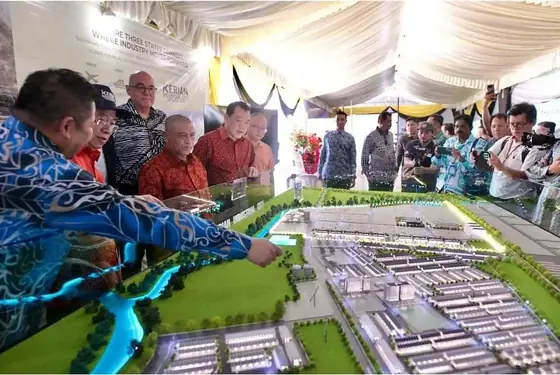
Perak breaks ground on 287-acre Kerian Industrial City
PKNP and Asiabina have started a RM700 million industrial city at Dennistown, Parit Buntar, with 36 semi-D factories and 47 lots, close to the Penang border.
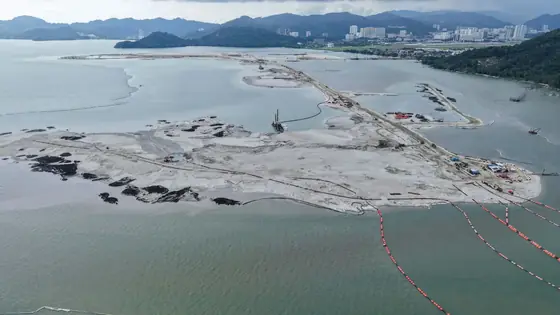
Penang Silicon Island: 480 acres reclaimed, RM1.9 billion spent, LRT depot handed over
Our standing page on Penang Silicon Island: 480 of 2,300 acres reclaimed, RM14 billion cost, first industrial land sale early 2027, first factories early 2029.
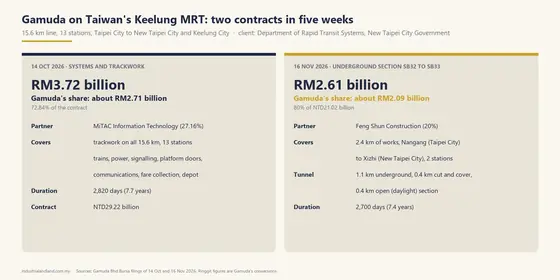
Gamuda JV wins RM2.61b underground job on Keelung MRT
Gamuda (80%) and Feng Shun won the NTD21.02b (RM2.61b) SB32-SB33 underground section of the Keelung MRT, its second contract on the line in five weeks.